
Why Website Speed Matters for SEO and Business Growth in 2026
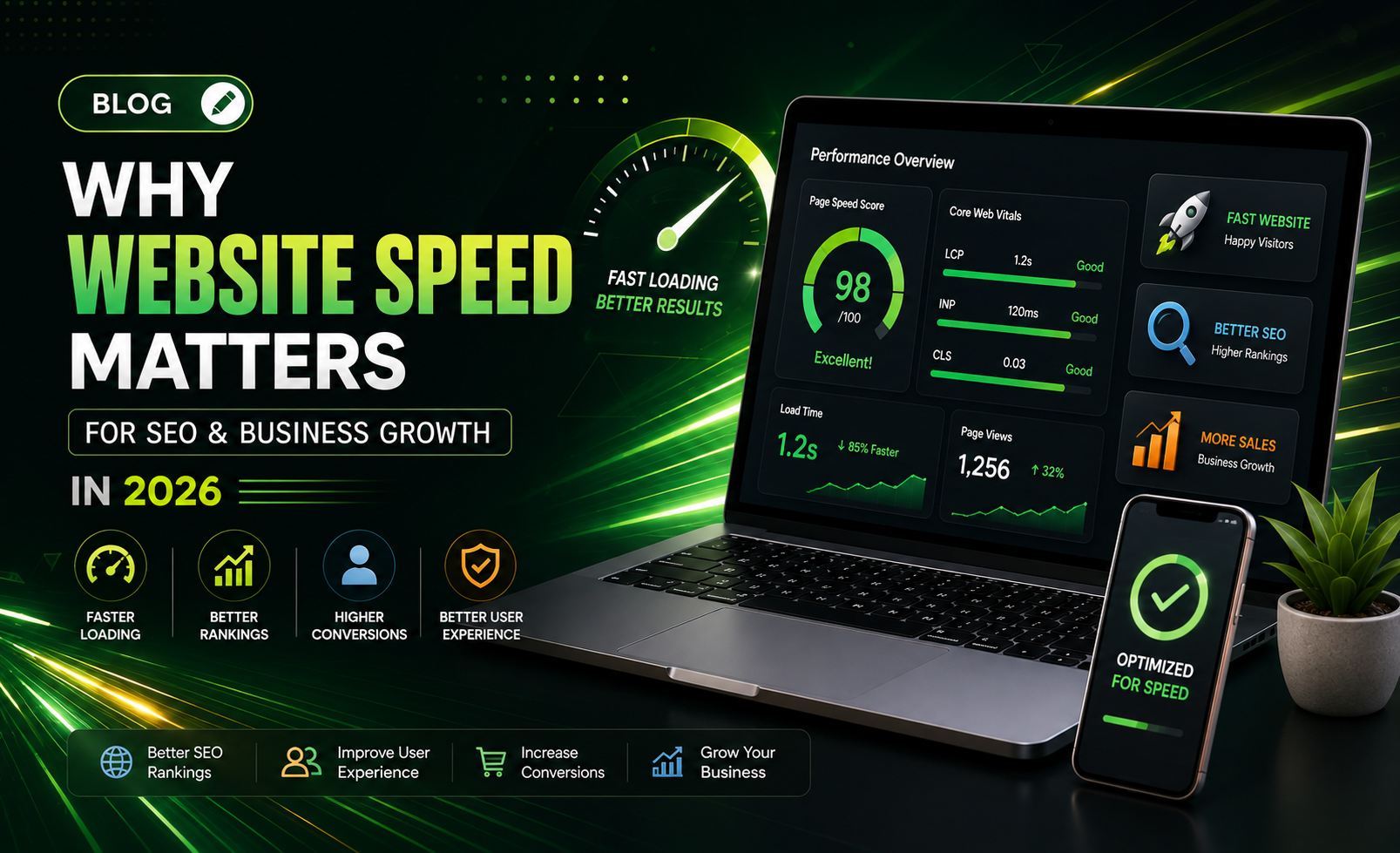
A slow website can hurt your search rankings, reduce conversions, and drive visitors away. Discover why website speed is essential for SEO, user experience, and business growth in 2026, along with practical tips to improve your site's performance.
Introduction
In today's competitive digital landscape, speed is everything. When someone visits your website, they expect pages to load almost instantly. If your website takes too long to load, many visitors will leave before viewing your products or services.
Website speed is no longer just a technical feature—it directly affects search engine rankings, customer satisfaction, lead generation, and overall business growth. Google considers page speed an important ranking factor, making website performance essential for businesses of every size.
This guide explains why website speed matters and how you can optimize your website for maximum performance.
What Is Website Speed?
Website speed refers to how quickly your website loads and becomes fully interactive for visitors.
A fast website delivers content immediately, while a slow website creates frustration and increases bounce rates.
Performance depends on multiple factors, including hosting quality, coding practices, images, scripts, databases, caching, and server response time.
Better User Experience
Visitors expect a smooth browsing experience.
Fast-loading pages allow users to navigate your website easily, increasing engagement and encouraging them to explore more pages.
Slow websites often result in:
- Higher bounce rates
- Lower customer satisfaction
- Fewer inquiries
- Reduced sales
- Poor brand perception
A positive user experience keeps visitors on your website longer.
Website Speed Improves SEO
Search engines aim to provide the best experience for users.
Fast websites are easier to crawl and often achieve better rankings than slower competitors.
Website speed influences:
- Core Web Vitals
- Mobile Experience
- Page Experience
- User Engagement
- Crawl Efficiency
Optimizing speed increases your chances of appearing higher in search results.
Increase Conversion Rates
Even small delays can reduce conversions.
Whether your goal is generating leads, selling products, or receiving inquiries, faster websites consistently perform better.
Fast websites encourage visitors to:
- Contact your business
- Complete purchases
- Fill out forms
- Request quotations
- Subscribe to newsletters
Performance directly impacts revenue.
Mobile Performance Is Critical
Most users browse the internet from smartphones.
Mobile users often rely on slower internet connections, making optimization even more important.
Responsive design combined with fast loading creates a better experience across all devices.
Common Reasons Websites Become Slow
Many websites suffer from unnecessary performance issues.
Common causes include:
- Large image files
- Poor web hosting
- Unoptimized code
- Too many plugins
- Heavy JavaScript
- Uncompressed CSS
- Slow database queries
- Missing browser caching
- No Content Delivery Network (CDN)
Identifying these issues is the first step toward optimization.
Best Practices for Website Speed Optimization
Improve your website by following these proven techniques:
Compress Images
Use modern image formats like WebP and optimize image sizes before uploading.
Enable Browser Caching
Caching reduces loading time for returning visitors.
Minify CSS and JavaScript
Removing unnecessary code decreases file size and improves performance.
Choose Reliable Hosting
High-quality hosting provides faster server response times and greater stability.
Use a CDN
Content Delivery Networks distribute website files across multiple servers worldwide, reducing loading time for visitors.
Optimize Database Performance
Regular database maintenance improves website responsiveness.
Website Speed and Core Web Vitals
Google measures website quality using Core Web Vitals.
Important metrics include:
- Largest Contentful Paint (LCP)
- Interaction to Next Paint (INP)
- Cumulative Layout Shift (CLS)
Optimizing these metrics improves both SEO and user experience.
How Soft Forest Builds High-Performance Websites
At Soft Forest, website performance is a priority from the beginning of every project.
We develop websites with:
- Clean, optimized code
- Responsive layouts
- Image optimization
- Advanced caching
- SEO-friendly architecture
- Secure development standards
- Fast loading pages
- Mobile-first design
- Performance optimization
- Scalable infrastructure
Every website is built to deliver speed, reliability, and long-term growth.
Final Thoughts
Website speed is one of the most valuable investments you can make for your online business.
A faster website improves search rankings, creates better user experiences, increases conversions, and builds customer trust.
Whether you're creating a new website or improving an existing one, optimizing website speed should always be a top priority.
If you're looking for a fast, secure, and SEO-friendly business website, Soft Forest can help you build a high-performance solution that supports your business growth in 2026 and beyond.
Soft Forests Team
We write about what actually works for businesses in Bangladesh — no fluff, no jargon.
Need help with this?
Talk to our team about web design & development for your business.
Keep Reading
More from the blog.
Custom Website vs Template Website: Which One Is Better for Your Business?
Aug 01, 2026 · 5 min read
Top 10 Features Every Modern Business Website Should Have in 2026
Aug 01, 2026 · 4 min read

Why Every Small Business Needs a Professional Website in 2026
Jul 28, 2026 · 4 min read
Ready to grow your business the right way?
Tell us about your business — we'll put together a free digital plan within 24 hours.